
Computational methods
Deterministic classification, evidence handling, phenotype-driven prioritisation and methodologies for nuclear, mitochondrial and structural variation.

We build the products genomic science needs to scale.

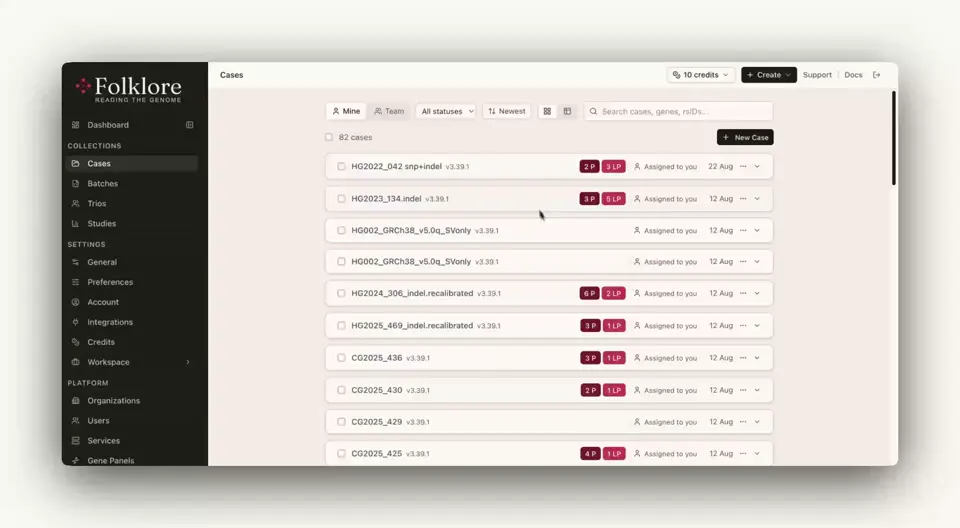
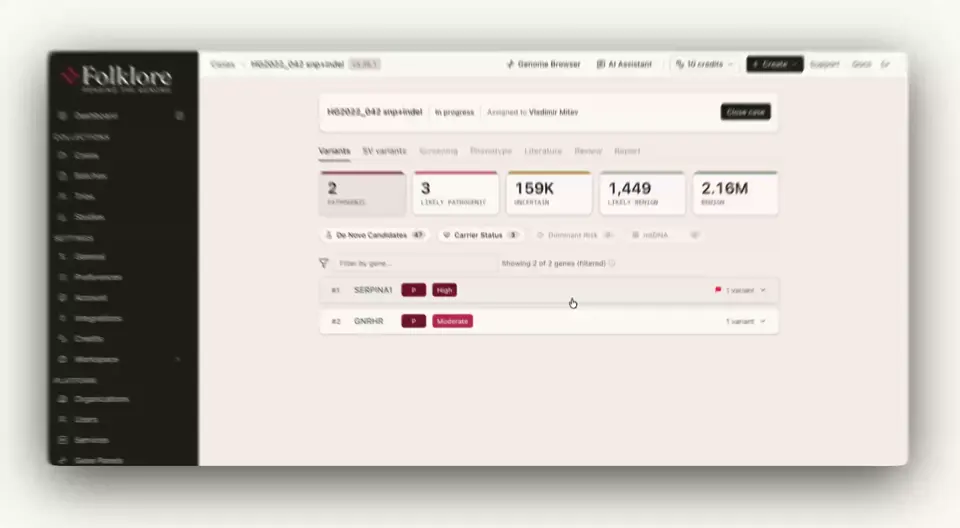
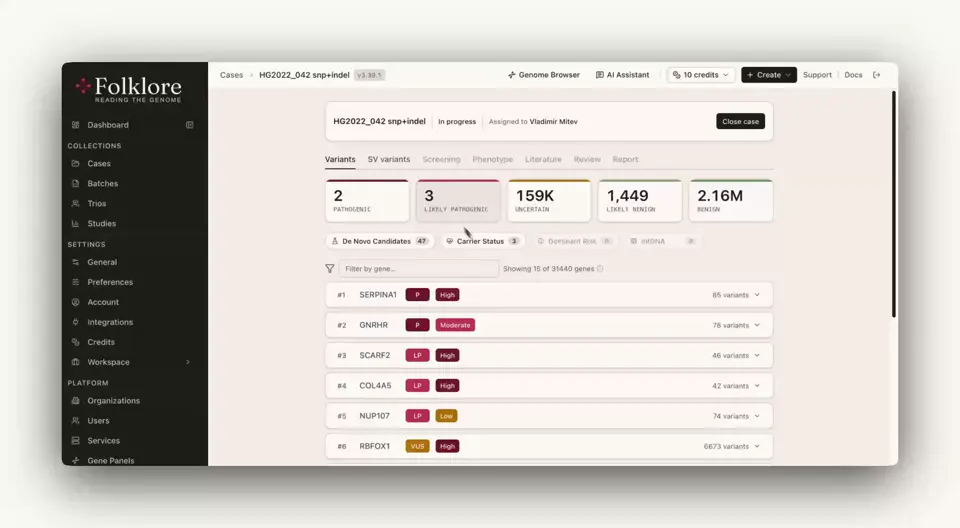
Folklore brings classification, evidence, phenotype and prioritisation into one case view. A qualified professional reviews the final interpretation.

Paused until Folklore is in focus Folklore Intro, video 1 of 4.
Swipe left or right to change the videos. Use the sound button to turn audio on or off.

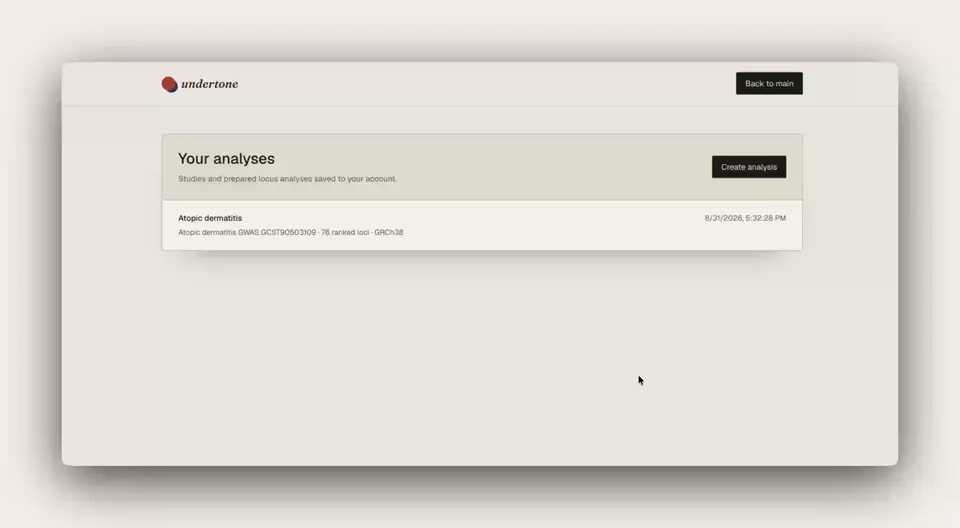
Paused until Undertone is in focus Undertone Promo, video 1 of 3.
Swipe left or right to change the videos. Use the sound button to turn audio on or off.
 undertone
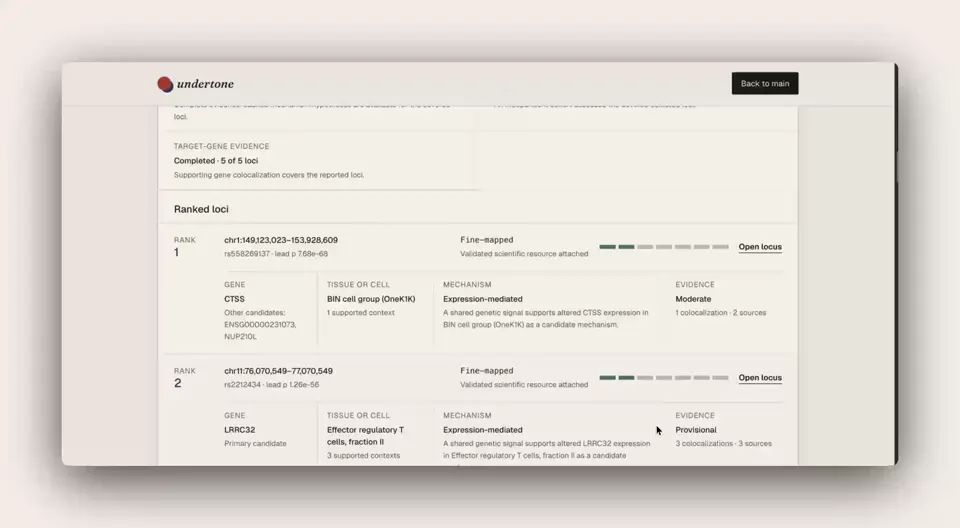
Undertone turns a complete GWAS into ranked loci, fine-mapping, candidate genes, tissues and mechanism hypotheses.
 noodle
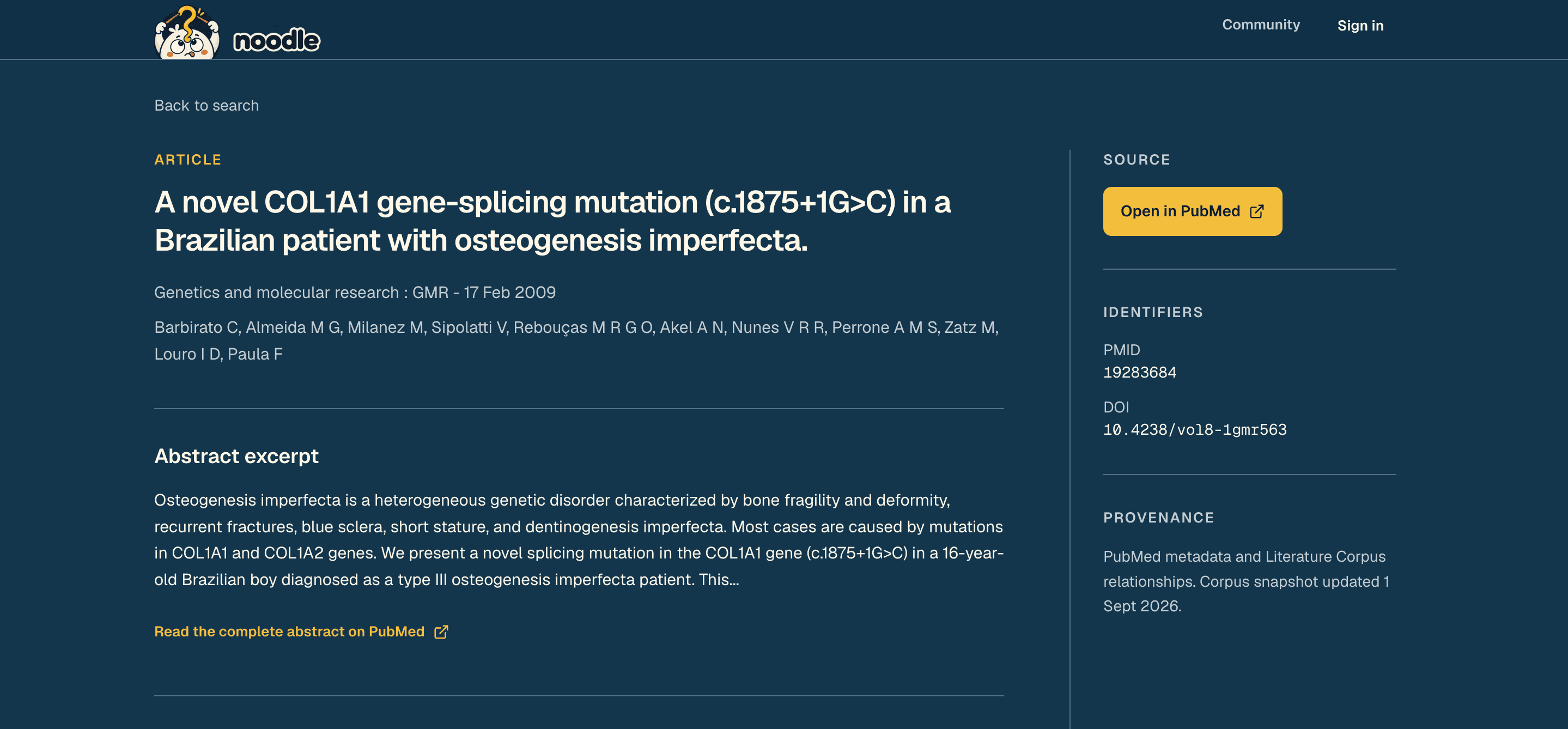
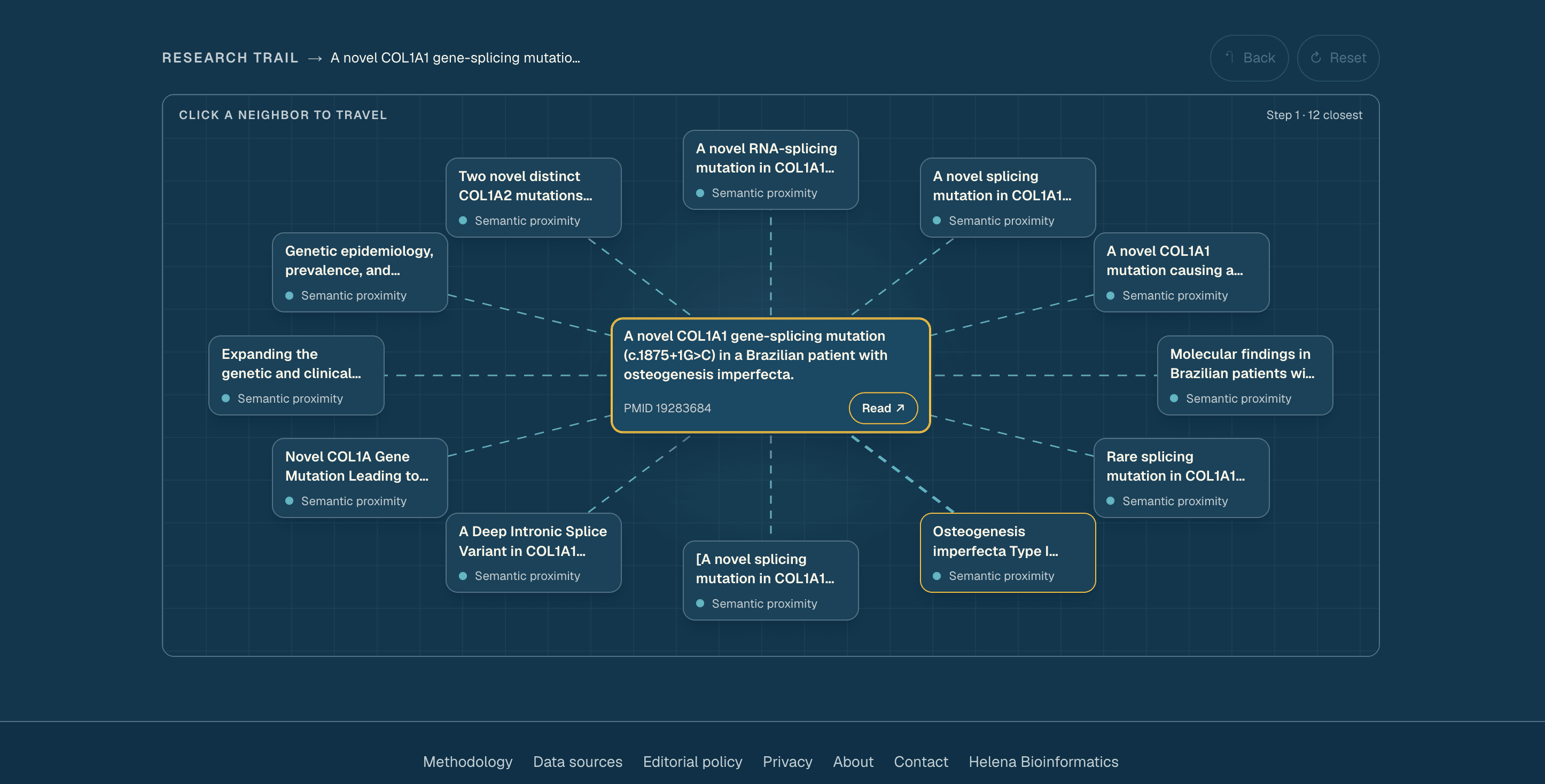
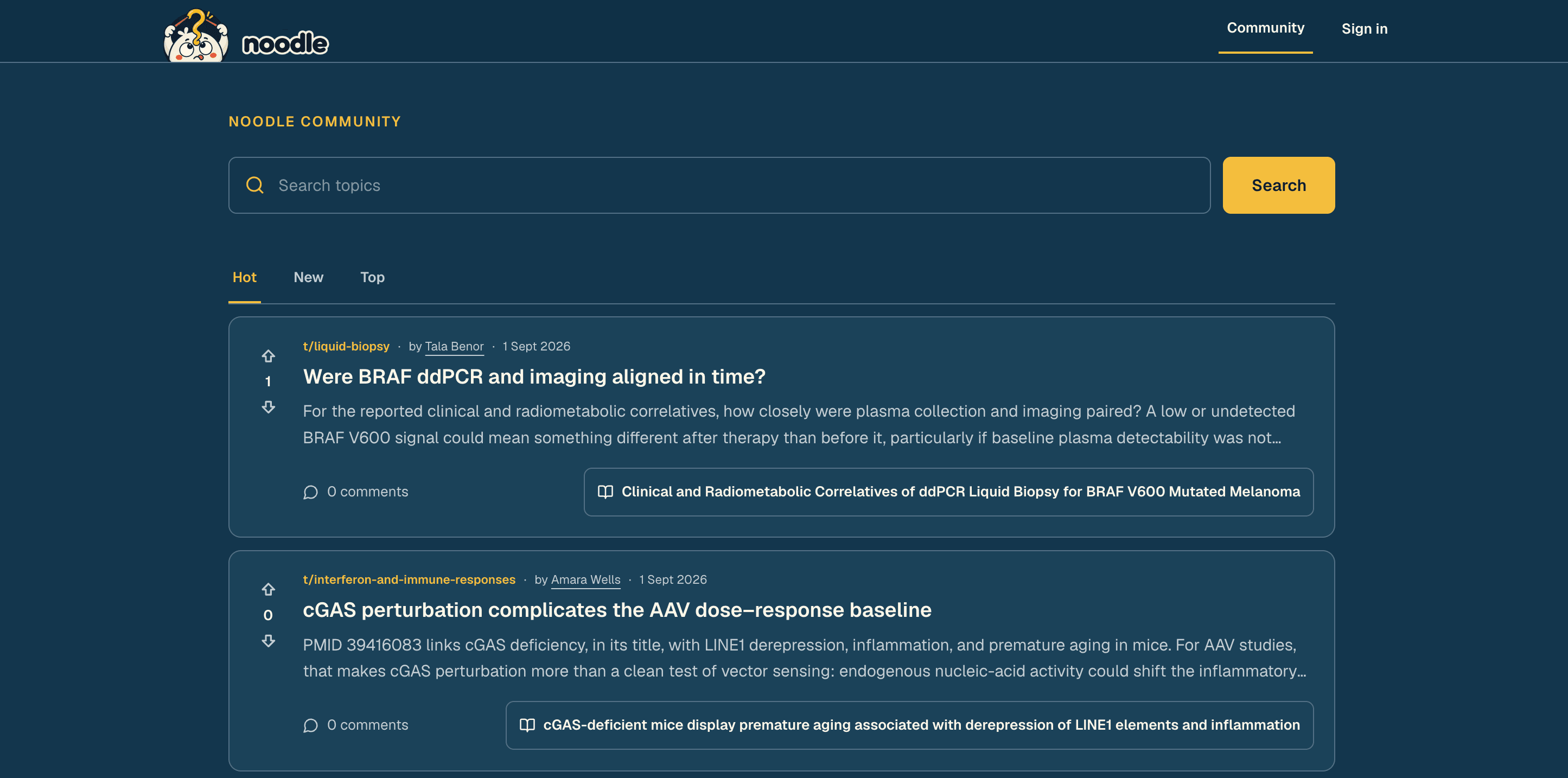
Noodle helps you discover biomedical research by meaning, explore connected publications and discuss scientific questions and papers with an active community of researchers.

Paused until Noodle is in focus Noodle Promo, video 1 of 4.
Swipe left or right to change the media. Use the sound button to turn audio on or off.

Paused until Evidence is in focus Evidence Promo, video 1 of 3.
Swipe left or right to change the videos. Use the sound button to turn audio on or off.
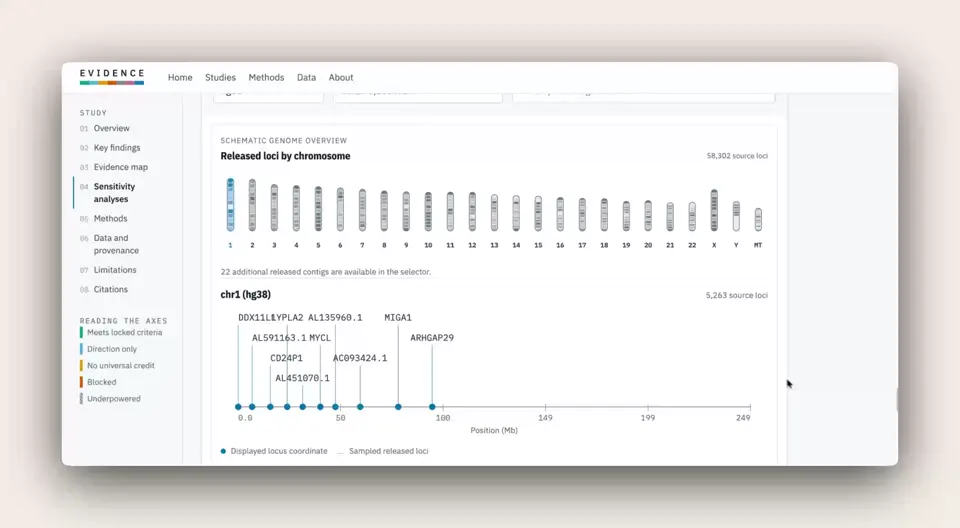
Evidence presents methods, results, sensitivity analyses and source files as one versioned study. Readers can change documented analytical decisions and see how the evidence moves.
Helena brings together genomic methodology, high-performance computing and clinical software engineering. Each layer is developed as part of the same system, from the treatment of evidence and reference data to the way results reach laboratory review.
Deterministic classification, evidence handling, phenotype-driven prioritisation and methodologies for nuclear, mitochondrial and structural variation.
Locally indexed reference data, parallel processing, controlled environments and versioned analytical dependencies.
Software that turns these methods into reviewable workflows for laboratories, geneticists and clinical teams.
Our work addresses how genomic evidence is admitted, classified, prioritised and presented for clinical review. Helena develops methodologies for deterministic variant classification, structural variation and agentic interpretation, and contributes these ideas through publications, preprints and technical documentation.
View researchPublished · Frontiers in Genetics
Evaluation methods for concordance, change attribution and failure analysis against documented laboratory comparators.
Early-stage variant classification platforms need a performance method that is stronger than an internal comparison but feasible before a multi-adjudicator regulatory study. A single peer laboratory is difficult to treat as ground truth when qualified laboratories can disagree. Formal adjudication, however, requires people and quality infrastructure that a small developer may not yet have.
The paper proposes a three-layer performance model, an evidence-strength-ordered approach to ground truth, a six-category disposition taxonomy for disagreements and a phased route toward later regulatory evidence. Each observation is assigned to analytical, classification or clinical performance so that the source of a discrepancy remains visible.
The method is demonstrated on 97 scored cases across three classifier versions. The demonstration shows how the framework operates. It does not validate the platform or establish superiority over another system.
This is a methodological proposal with a single-platform demonstration. It uses one peer comparator, develops the taxonomy on the same cohorts used to illustrate it and carries conflicts of interest that require independent replication.

Preprint · Perspective
A framework that keeps model output outside the class calculation and places human authorization where evidence enters the classifier.
Clinical AI oversight is often concentrated at final output. In variant classification, an autonomous component can affect the decision earlier by changing the reference data and evidence snapshot consumed by the classifier.
This Perspective places the load-bearing human transition at evidence admissibility (G1). An authorized person promotes a provenanced, version-locked evidence snapshot before it enters a deterministic, model-output-free ACMG/AMP classification core. Qualified sign-out (G4) remains necessary when the result is released.
The paper proposes six evaluation metrics covering unauthorized evidence admission, attribution of classification changes, model-to-core boundary violations, exact reconstruction, narrative contradiction and prioritization omission. These are proposed tests, not reported validation results.
The framework addresses auditability and governance. It does not establish classification correctness, clinical validation, comparative effectiveness or fitness for purpose. Complete separation also increases the workload of human literature curation.


We at Helena Bioinformatics work with laboratories, universities and research organisations on genomic interpretation, validation and clinical implementation.